Or, The Oligarchy’s Apologia
Corporate Voters Project – Research Note #8

It’s been a busy few months for corporate voting in Delaware. As late spring turned to summer heat, the practice emerged as a politically salient issue, attracting local, state, and national attention. In both the courtroom and Legislative Hall, Delawareans have been articulating their positions on it – doing so publicly for perhaps for the first time in the state’s history.
In the process, supporters of corporate voting have outlined a clear theory of local oligarchy. In this vision, the ownership of taxable real estate justifies rights to formal electoral power – and perhaps especially so if the property owner in question is a non-human business entity who cannot otherwise act locally (while thinking globally).
In a moment when rights claims based on residence and birthright are under sustained attack by fascists and their allies, Delaware’s defenders of corporate voting have reinvigorated an old idea for a new era. Like early modern republicans, they envision a world in which ownership of taxable property produces and justifies citizenship – at least at the level of government closest to the ground. Unlike their predecessors, though, Delaware’s apologists for corporate voting imagine artificial entities, the law’s golems, as equally worthy bearers of a municipality’s political rights as any flesh and blood burgher might be. Jus soli might be hanging on by a single SCOTUS vote – the plain text of the Fourteenth Amendment be damned – but for some in the First State, legitimate voting power springs from owning the soil, for human and entity alike.
For their part, opponents of corporate voting have not questioned the importance of property to power, but only averred that human beings, alone and individually, should access the ballot. They’ve avoided the question of whether wealth itself is sufficient justification for suffrage, and dodged bigger problem of non-resident (human) property-owner voting, which is widespread and popular in Delaware, and not entirely unheard of beyond the state. There are limits to Delaware’s institutional advocates for human-centered democracy.
This debate marks a new phase in Delaware’s self-understanding about the foundations of its local political economies, one in which the parties engaged in the contest, and the values at stake, are finally named. Too, with this controversy, the connections between the capillary oligarchy of local government and the better-known corporate domination of the state’s politics have emerged from obscurity – or perhaps they’ve been forged for the first time.
It’s an exciting time to be doing frustratingly difficult historical research!
~ ~ ~
A lawsuit kicked off Delaware’s unprecedentedly public debate over corporate voting. In December 2025, the ACLU of Delaware sued the Town of Fenwick Island over the municipality’s practice of awarding votes to the “corporations, partnerships, trusts, and limited liability companies” that owned property there. The ACLU-DE argued that by allowing 214 non-human artificial entities to registered to vote – with no limit on more – the town “risks the dilution of votes cast by natural persons” and therefore was in violation of the Delaware Constitution’s guarantee of “free and equal” elections.
The ACLU-DE also tied corporate voting to the state’s better-known corporate franchise, and its status as the “Corporate Capital.” In a press release, the plaintiff’s attorney, Andrew Bernstein, noted that “[t]here are over 2 million artificial business entities incorporated in Delaware and only about 1 million people,” and in those circumstances “the people of Delaware risk having their voices drowned out when towns like Fenwick Island allow artificial entities to vote.”
In response to the suit, Fenwick Island Mayor Natalie Magdeburger offered a robust defense at a Town Council meeting. She insisted, pace the ACLU-DE’s insinuations of corporate influence, that “a great number of the artificial entities that vote in Fenwick Island elections are family trusts,” not corporations per se. But regardless of the type of artificial entity, she said the Town would defend their rights to political representation. “We think it’s important that everyone in town who pays taxes, who is subject to our ordinances whether they’re a business owner or not, have a right to a vote.” An entity’s compulsory monetary contributions to the local fisc, made on the basis of assessed real estate, was, in her view, the entry ticket to town government.
On May 26, 2026, Delaware Superior Court Judge Craig A. Karsnitz sided with Fenwick’s officials, and dismissed the ACLU-DE’s complaint. In his opinion, Karsnitz developed what appears to be a wholly new legal interpretation to justify corporate voting, becoming the first to “clearly articulate the ideological connection between Delaware’s ‘corporate franchise’ and its enfranchised corporations.“
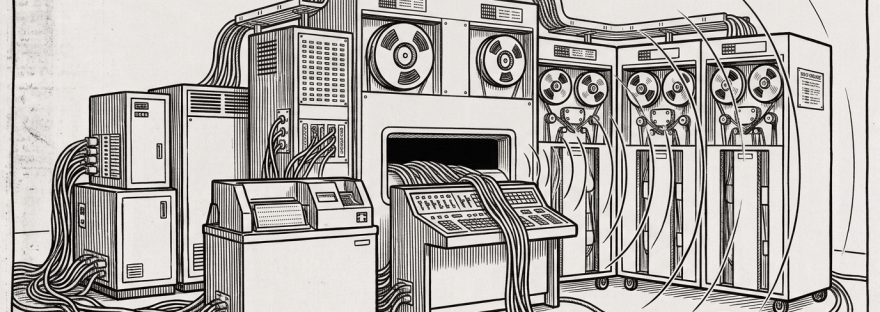
Perhaps fitting the unusual circumstances, Judge Karsnitz’s opinion was a curious one. After some throat-clearing featuring a wandering quotation from an obscure Luso-Luxembourger teacher of English, Judge Karsnitz explained his dismissal did not rest on any detailed scrutiny of newly-gathered facts.[1] Reasoning that because the Delaware General Assembly’s laws are presumed constitutional, challenges to Fenwick’s charter must meet a high burden to merit review – a burden he argued the ACLU-DE failed to meet, not least because the state did not just extend voting rights to corporations once, but several times, in different municipalities.[2] Then, going well beyond election law and constitutional provisions, Karsnitz argued that because the State of Delaware’s business law explicitly recognizes trusts, partnerships, LLCs, and corporations as “persons” in limited circumstances, their votes cannot be considered as diluting other persons’ votes.[3] He concluded by stating that while he “appreciate[s] that Plaintiff may disagree with Delaware’s policy of authorizing” corporate voting, the vision of “faceless large corporations or even HAL, controlling a small town” are “the stuff of science fiction” – and not a suitably adjudicable problem.[4]
SIDEBAR: A few days after Judge Karsnitz invoked the prospect of an autonomous computer taking control of a polity to dismiss it, the Delaware AI Commission met to announce their draft legislation that would suspend regulations to allow the creation of Artificial Intelligence Companies. These “AICs,” members of the commission explained, would have legal agency to do “anything that a company can do” without their owners being held liable.
Including, presumably, vote as property-owners in Fenwick Island.
(Judges, at all levels, seem unwilling to contemplate just how eager Delaware is to create and implement the Torment Nexus, provided there are fees to collect.)
The ACLU-DE has appealed the dismissal. In their press release following the decision, they noted that the judge’s ruling has “garned national attention” – one might also say outrage and bewilderment – and that many people had expressed concern about the precedent it would set. Responding to the ruling, Fenwick Island Mayor Natalie Magdeburger reiterated the Town’s position, and expanded her emphasis on the righteousness of the cause, stating that “[w]e firmly believe our voting system is just, fair and gives everyone a voice.” Every property owner paying taxes “should have a say in who represents them on our Town Council,” she explained. In the political arithmetic of corporate voting, property taxation to any amount is a moral liability that can only be balanced by representation, an asset that takes the form of one vote per entity.
~ ~ ~
While this courtroom drama was playing out, the Delaware General Assembly was considering – and then passing – HB 430, legislation that would amend the state constitution to restrict voting in all Delaware elections to “natural persons,” and thereby end corporate voting. (Constitutional amendments in Delaware are enacted if they pass both houses of the legislature with a two thirds majority, in two successive sessions. The earliest this bill could become law is when the legislature meets next spring 2027).
According to its sponsor, House Majority Leader Rep. Kerri Evelyn Harris (D-Dover), the bill is not about “how municipalities govern themselves” but rather “who gets to decide who gets to choose their governments in the first place.” For Harris and the other cosponsors of the bill (all Democrats), “voting is a right that belongs to human beings,” not corporations. Anticipating pushback from local officials, Harris further noted that the state had undisputed power to issue these restrictions. The General Assembly, she informed a House committee, has never treated municipalities as “independent sovereigns”; their powers are defined by the charters that the state grants them. (Historically, state and federal governments share sovereign powers in the US; localities have no constitutional claims to “home rule.”)
HB 430 passed the Delaware House of Representatives on June 16, 2026 with the required two-thirds majority. The vote was bipartisan, but just: only one GOP representative voted for it. Though the Republican caucus opposed it, only one member spoke against the bill. Rep. Bryan Shupe (R-Milford) sought to put on the record that he and other “small business owners” who used LLCs were responsible, as human beings, for paying taxes, and that is why some municipalities have allowed – and still others seek to allow – “small business owners” to vote in municipal elections. For Shupe, voting rights in exchange for payments was simply a fair transaction, hallowed by long use. In response, Rep. Harris noted that tradition was no defense: “just because something is a longstanding practice does not mean that it should continue.”[5]
In these and later comments, Rep. Shupe attempted to draw a distinction between large corporations and mom-and-pop LLCs, while still leaving unexplained the justification for property earning a vote. “We don’t necessarily want the Fortune 500 having a say in elections here,” he told the Wilmington News Journal, “but homegrown businesses should.” (Why that should be the case, he left unstated).
Similarly, the mayor of Fenwick Island declared the HB 430 vote “a shame” and a “glaring example of the erosion of home rule.” “The ACLU has come in and painted Fenwick Island as a town that has been taken over by corporate entities,” Mayor Magdeburger told Coastal Point, but most of the artificial entities registered to vote in Fenwick were trusts, LLCs, or limited partnerships. While maintaining that critics concerns that “businesses are going to take over and dilute the vote” were unfounded, the mayor also complained that if made law, HB 430 would disenfranchise around 200 of the Town’s 900 registered voters (i.e. ~22% of the electorate).
On the last day of the legislative session, HB 430 passed the Senate on a strict party-line vote, with all Democrats voting in favor and all Republicans against, completing the first “leg” of the constitutional amendment process. Reportedly, Sen. Gerald Hocker, GOP minority leader – and the legislative sponsor of Fenwick’s 2008 charter that established the present regime – “vocally opposed” the bill.
~ ~ ~
Corporate voting in Delaware is not the creation of world-dominanting oligarchs, nor is it a tool they use. Amazon.com, Inc. is not going to spoil the race for town council in Middletown by voting its warehouse holdings; JPMorgan Chase & Co. is unlikely to cast the deciding ballot for a beach-town mayor on the basis of repossessed mortgages. Rather, corporate voting in Delaware is a vehicle for granting those lesser grandees who own property – specifically, taxable real estate – extra political power because of their local, landed wealth.
As Rep. Shupe’s comments and Mayor Magdeburger’s statements make clear, for defenders of corporate voting in Delaware, there are distinctions to be drawn among artificial entities, but no disagreement over whether property creates citizenship rights for fictional people. In the courtroom, in the legislature, and in the public square, apologists for corporate voting imply that corporations are somehow different than other kinds of business entities – they are distant, faceless, perhaps malevolent – in contrast to LLCs, trusts, and limited partnerships.
This difference has little relationship to reality. While legally these entities are distinct in their governance and their means of assigning tax responsibilities, those structural differences do not determine their proximity to a human community or their degree of similarity to “natural persons.” An LLC can be a huge, opaque, and far-away abstraction, and a corporation can be a one-person operation familiar and friendly to all on Main Street. Neither of them are human beings.
It’s important to note here that Delaware’s critics of corporate voting have not attacked the practice of granting civil and political rights to individual human beings purely on the basis of their personal property ownership. The objection of HB 430’s sponsors and the ACLU-DE is to the type of person – artificial or natural – submitting a ballot, not the basis upon which they do so.
That’s notable because corporate voting is just one way for property-owning nonresidents to exercise control over places where they do not live. This may be part of the reason why it is so common in Sussex County, an area with valuable beach front property – owned, in many cases, by absentees, members of the “family trusts” that Fenwick’s mayor has been fond of invoking (with emphasis on “family”).
In granting property owners more power than mere mortal persons, corporate voting echoes anti-democratic mechanisms from earlier eras of American history. Like the U.S. Constitution’s 3/5ths clause (granting enslavers more representation on the basis of their human property) or Jim Crow Delaware’s poll taxes (which limited the vote to taxpayers, stealing suffrage from the poor), corporate voting is yet one more way those with more money get a louder voice in public affairs.
Whether artificial entities get to keep that register for their influence is an open question now in a way it was not before, a salutary development for all fans of democracy. Still, that landed wealth remains unquestioned as a source of citizenship, even amid this change – and perhaps may emerge stronger as a unifying principle across parties and activist groups – should raise some red flags.
—–
[1] This may be a confession of my own ignorance; until reading Judge Karsnitz’s order, I had never encountered “Diogo Joao Baptista Gomes of Brachtenbach,” someone who appears to have responded to a reader poll sponsored by Philosophy Now magazine. While those more learnèd in the law may know his work well, it appears there is at least one other observer puzzled by the Superior Court judge’s compliment. “What Is a Person?,”Philosophy Now, April/May 2022.
[2] Worthy magistrate Karsnitz only mentions the 2008 Fenwick charter in his decision. Am. Civ. Lib. Union of Del. v. Town of Fenwick Island, Del. Super., C.A. No. S25C-12-003, Karsnitz, R.J. (May 26, 2026)(ORDER), p.6; see pp. 8-12 for wider consideration on charters.
Wise and worldly readers will know that corporate voting came to Fenwick in a limited way through its 1965 charter revision – and then was expanded in practice, first under unpublished bylaws and only later legislatively blessed by formal charter amendments.
[3] Am. Civ. Lib. Union of Del. v. Town of Fenwick Island, Del. Super., C.A. No. S25C-12-003, Karsnitz, R.J. (May 26, 2026)(ORDER), pp. 13-17.
[4] If you’re wondering if this sober jurist used the opportunity of his own dated reference to insert a superfluous citation to a famous film, why yes, yes he did. Am. Civ. Lib. Union of Del. v. Town of Fenwick Island, Del. Super., C.A. No. S25C-12-003, Karsnitz, R.J. (May 26, 2026)(ORDER), p. 19
[5] Delaware House of Representatives, 153rd General Assembly, Legislative Session 2, 36th Legislative Day, June 16, 2026, 7:29pm-7:39pm.
 Dael A. Norwood