Delaware, Power At Play

Taking the Wolves’ Side

Or, The Road to Hell is Paved With Private Offerings

Two wolves, one biting the other's snout; blue shadows, yellow highlights, duotone. "Wolves (Canis lupus lupus) at Polar Zoo in municipality of Bardu, Troms County, Norway." From Wikimedia https://en.wikipedia.org/wiki/File:Wolves_in_Norway.jpg
Bipartisan Comity

I have a brief opinion piece in the Bay to Bay News today, that puts a new, bad bill in historical context – and explains why I think it will harm a lot of people.

Here’s a teaser:

It’s 2025: Do you feel like you aren’t getting scammed enough? Are you tired of not being cheated, ripped off and defrauded? Probably not. We’re drowning in spam calls, phishing emails and junk mail, all pitching shady deals. It seems like we’re under constant siege by an army of con artists — and they’re winning.

Most people would prefer that government stop these financial predators — not lead more wolves to the door.

Unfortunately, Congress has taken the side of the wolves. Led by Rep. Sarah McBride, D-Del., the House of Representatives just unanimously passed the Equal Opportunity for All Investors Act of 2025. The bill smashes down guardrails that, for almost a century, kept Wall Street sharpers from picking the pockets of regular people. Together with the Trump administration’s rush to eradicate limits on private equity’s access to your retirement savings, this legislation sets the stage for a new financial crisis.

~ Dael Norwood, “Norwood: McBride’s New Bill Threatens with Old Scams,” Bay to Bay News (Dover, DE), August 8, 2025, https://baytobaynews.com/stories/norwood-mcbrides-new-bill-threatens-with-old-scams,244521.

I also did a thread on Bluesky linking out to the sources I consulted while writing.

Archival Follies, Delaware

In Close Touch, But Not Commanded

Or, a New Deal Democrat describes a Delaware Senator as … unbought?

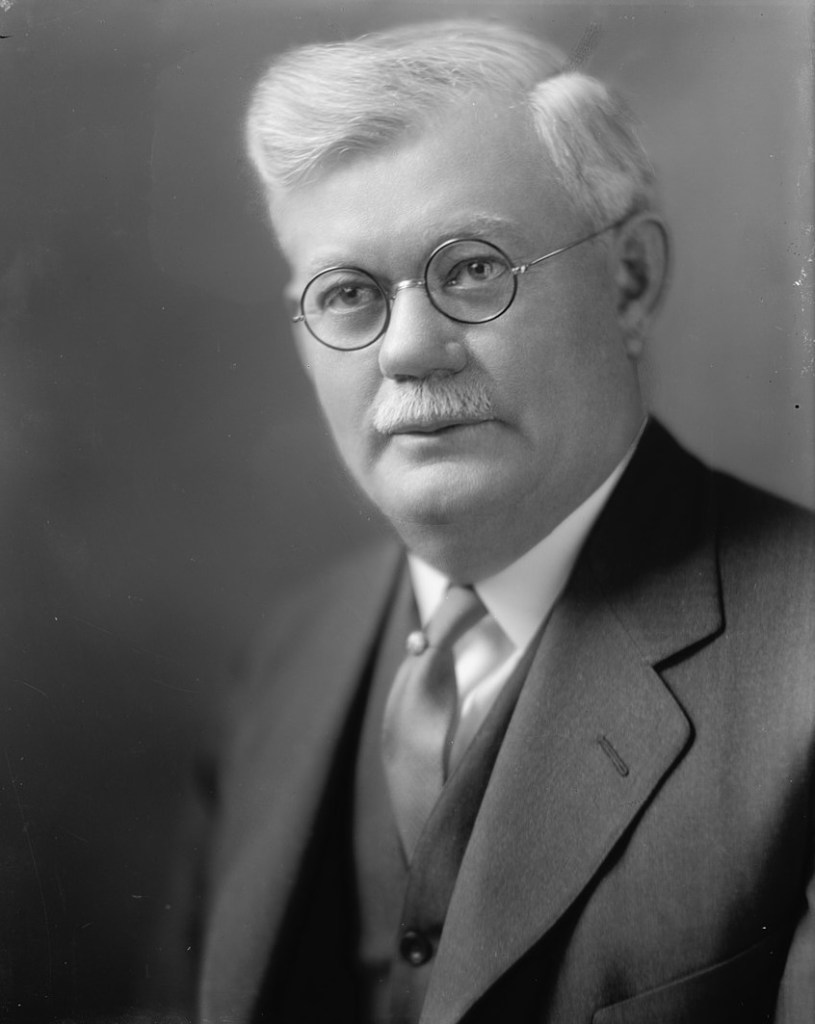
A portrait of a pale, elderly white man wearing a suit and glasses, with white hair and a neatly trimmed mustache. TOWNSEND, JOHN G. SENATOR Abstract/medium: 1 negative : glass ; 8 x 10 in. or smaller. Harris & Ewing Collection, Library of Congress. between 1905 and 1945, possibly circa 1930. Avail via Wikipedia. https://commons.wikimedia.org/wiki/File:TOWNSEND,_JOHN_G._SENATOR_LCCN2016860876_(Cropped).jpg
Sen. John G. Townsend, Jr., of Delaware. Apparently not fully owned by corporate interests!

In the course of researching the political history of the Securities Act of 1933, I encountered a rather surprising description of a Delaware politician. In 1959, “Dean” James M. Landis, one of the aides primarily responsible for drafting the bill and shepherding it through Congress, published a close account of his experience getting this critical New Deal legislation off the drawing board and into the law books.

His article is a brief but quite detailed play-by-play of the political process – an Aaron Sorkin narrative, but with substance – and includes a number of deft character sketches of the various politicos and operators he dealt with as he hustled the most important federal financial regulation ever written over the finish line.

At the moment of high drama of his narrative (the House-Senate bill reconciliation conference meetings) he characterizes Senator John G. Townsend, Jr. (R-DE) this way:

“The tenseness of the first day’s session became relieved as [Rep. Sam] Rayburn made it plain that any suggestion of any Senator would receive the most careful consideration. A goodly number of suggestions came from Senator Townsend of Delaware, a Republican, who was in close touch with the financial world but who under no circumstances would take their suggestions as commands or as ideas to hold on to in the face of a compelling argument to the contrary.” [emphasis mine]

~James M. Landis, “Legislative History of the Securities Act of 1933,” George Washington Law Review 28, no. 1 (1959): 45-46

FDR’s man on the ground, a Felix Frankfurter student and Louis Brandeis protégé, a future chair of the SEC, Landis was impressed with how uncorrupted a Delaware Senator was by corporate financiers. As far as I know, that makes Townsend the first – and perhaps only – senator thusly described (certainly that differentiates him from other Delaware (state) senators who share his name…)

In short: history is full of surprises!

And ironies, too: the latest neoliberal salvo aimed at fatally wounding the New Deal regulatory state – and specifically, to gut the Securities Act of 1933 that Townsend helped design – was co-sponsored by none other than Delaware’s own Rep. Sarah McBride. As Rep. McBride’s personal PR page notes, this attack on financial transparency and good government is “Her First Bill in Congress.”

Delaware, The Past is a Foreign...Something

The Best Thing to Ever Happen to the State of … Delaware?

Or, It’s Time to Imagine a Future Beyond the Franchise 

Lyman Beecher – a guy who saw some downfalls and declensions in his time

The Delaware franchise has been under serious attack for some time. Leading the charge are the richest men in the world, billionaire tech financiers, who see in Delaware law an outrageous affront to their power. 

The conflict is something of a tragic irony for First State jurists. Emerging from the coddled confines of Palo Alto office parks, Manhattan penthouses, and group chats, these monied men understand themselves to be heroic innovators rather than well-placed directors of capital flows, men of history who are by dint of genetic excellence and genius effort elevated beyond the common clay. They therefore bristle at what a prior generation regarded as the final victory of Friedmanite ideology, viz., Delaware’s judge-made law that requires all business decisions to be made in favor of shareholder gain, and nothing else.

For anyone outside the cult of Gordon Gekko, it’s clear that the federalist jujitsu that’s made Delaware’s perverse insistence on shareholder primacy and short-term profit go global has been a disaster – for human health and flourishing, generally, and democracy in the United States, specifically. But for our modern robber barons, the application of judicial restraints – even for the purpose of maximizing shareholder gains! – has been as enraging and painful as a public flogging. In retaliation for this keenly felt but entirely imaginary insult, they and their servants in the corporate law world have fanned the flames for “DExit.” The goal, transparently and repeatedly announced, is to punish Delaware, and especially its judges, by denying the state the corporate franchise fees and escheats upon which it has grown dependent. They want to starve the horse they rode in on.

Delaware’s governors and legislators have responded to these attacks with abject capitulation. But since the root of the conflict lies in rich narcissists’ hurt feelings, appeasement has not worked. Instead, attacks have continued. In the past week, leaders of the world’s largest VC firm, known for hiring homicidal vigilantes, proudly declared they were “Leaving Delaware” and invited others to do likewise, in order to escape Delaware’s onerous bias “against technology startup founders and their boards.”

Leaving aside the bizarre dissembling involved with officers of an LLC claiming they will change the “state of its incorporation,” the conclusion that must be drawn from this latest tantrum is that the fuel for “DExit” is far from finished.  True, the corporate stampede that SV billionaires have attempted to kickstart has not yet caught on. But given the power this cohort of corporate aristocrats wields – oceans of capital, vast media megaphones, and a keystone place in the revanchist coalition governing the United States – a future in which Delaware’s corporate franchise is crippled, or killed outright, seems a distinct possibility. 

So what happens when the standing order of a state comes crashing down? 

~

In 1818, the State of Connecticut adopted a new constitution, and disestablished the Congregational church. After almost two centuries of legally mandated taxpayer support, the state’s church was overthrown – out-muscled by a coalition of Democratic-Republican partisans and rival Protestant denominations, who took the opportunity of the Federalist Party’s decline to crack the central pillar of Connecticut’s “Standing Order,” and wedge in a measure of religious freedom in the bargain. 

The war for disestablishment was fiercely fought for years. Lyman Beecher, a popular and ambitious Congregationalist minister, was among the leading anti-disestablishmentarians. In his early forties when the institutions that defined his life and successful career started to totter, he worked frantically to shore them up, organizing political supporters and leading evangelical revivals “with all [his] might” to salvage what he regarded as humanity’s last best hope for salvation. 

Beecher worked until his “health and spirits began to fail,” but he and his co-religionists still lost – and fell into grief when they were beaten. Harriet Beecher Stowe, his daughter, remembered that when news of the key election loss arrived at their home, “a perfect wail arose.” Beecher himself recalled the period was “as dark a day as I ever saw” (quite a thing for a guy living in an era of high infant mortality to say). 

However, in time, he changed his mind. 

“I suffered what no tongue can tell for the best thing that ever happened to the State of Connecticut.” [emphasis in original] [1]

In describing disestablishment this way, Beecher didn’t mean that the state itself benefited, as a government. He meant that society as a whole did. Being thrown “wholly on their own resources and on God” increased ministers’ influence, he argued, by forcing their evangelizing to go to ground – to save souls through “voluntary efforts, societies, missions and revivals” rather than through coercive force or the trappings of wealth and power. Disestablishment, for Beecher, furthered God’s cause by making it more authentic, and thus more popular.  

Beecher came to this perspective after a long life of successful (and controversial) evangelical work. He was also riding a tsunami of transformative evangelical fervor in the Second Great Awakening, a wave of dramatic cultural change with origins, energy, and effects that drew on waters far deeper and wider than any in the Nutmeg state. 

Still, I think Beecher’s late-life observation is worth keeping in mind, particularly when considering changes in a state’s political economy that might seem apocalyptic. He saw the downfall of the Connecticut’s Standing Order, an establishment much sturdier and long-lived than any kind of Delaware Way, and lived to call it a blessing.

~

We live in times in which it is difficult to imagine the future. Or at least, difficult to envision latter days where a boot isn’t stamping on a human face – for ever

And yet, change comes. As Ursula Le Guin explained, “[w]e live in capitalism. Its power seems inescapable; so did the divine right of kings.” In that moment, Le Guin was contemplating art amid Amazon’s growing monopoly, but she did so with a historical sense that stretched beyond Bezos’s horizons, and an anthropologist’s awareness of how all human societies, like human beings, are mortal

Delaware’s corporate franchise is itself transitory. As Vice Chancellor J. Travis Laster has recently observed, “[f]or the first 120 years of Delaware’s existence, corporations were no more significant to Delaware than to any other state.”[3] Delaware, as a self-governing polity, has existed for a handful of years longer under its current corporate configuration than it has without it – but the years where franchise revenues were critical to state finances are many fewer than that. Delaware’s current political economy has a history – and it’s not a long one, nor inevitable.

That’s important to keep in mind today, when the power of the franchise seems both inescapable and irresistible. It’s a force that routinely turns politicians who ran (and wrote!) as progressives into staid corporate defenders, and constantly skews governing priorities toward ends that do substantial social harm, in Delaware and beyond. By setting up shop as the preeminent caterer for corporate whims, Delaware has caught the corporate “wolf by the ear,” and can neither function as a state without depending on its revenue, nor function as a representative democracy within that dependence.

In this sense, the tech billionaires’ revolt  – like their intellectual ancestors’ rebellion for treason in defense of slavery – could be the rare kind of creative destruction that allows a greater freedom for the many, rather than exploitation by the few. 

But if Delaware is to get to that outcome, some study and planning for that future is needed, now. This year, the legislature has invested in research to maintain the status quo, but a serious effort for a truly forward-thinking and realistic agenda will require something different. [4]

Some questions Delaware must answer: 

  • What sources do similarly small states rely on for revenue? Rhode Island persists, without a franchise; could Delaware?
  • How much could a sales tax bring in – and what rate would maximize revenue while minimizing the burden on the least able to afford it? What kind of transition procedure would be least disruptive?
  • Delaware Democrats recently quashed an effort to update personal income tax brackets to make them more equitable. Could a successful effort capture sufficient revenue from high-income earners to make up for a portion of franchise losses? (Ironically, in this case the actors most responsible for the “DExit” flight – corporate defense lawyers – may be the most directly able to bear new taxes to make up its loss).
  • The Delaware State Bar claims that corporate law services bring in billions, but the industry’s economic impact has not been rigorously studied by independent researchers.[5] What is the industry’s true value, and what effect will the decline and loss of the franchise have on employment, and public revenues? If billionaires and tech corporations abandon the state, but LLCs and other business entities continue to be formed here, what effect will that have on court usage and lawyers’ employment?  
  • Finally, it would be well to expand our historical understanding of the franchise. Shockingly little is known about the actual operations of the franchise in the past, or its development, as a functioning support for government. When did Delaware become dependent on the corporate franchise for revenue – and how did that process unfold? Recent research suggests the oft-repeated story, that Delaware’s dominance of the corporate charter market started with New Jersey’s fall in 1911, has a severe evidence problem.[6] So when did things start to change, who drove it, and with what consequences? A firmer grasp of the facts of what happened would, I suspect, change our ideas about what is possible.  

The life or death of the corporate franchise is not a matter within Delawareans’ control. That, in itself, is a reason to want to diversify the state’s revenue sources. But even if First State politicos are unwilling to quit the gravy train cold turkey, their dealers seem ready to cut off the supply, nonconsensually.

In either case, its time for Delawareans to start thinking hard about what a future without the franchise might mean – the problems it would bring, but also the opportunities. Because stasis isn’t just unlikely; it’s impossible.

—–

[1] Lyman Beecher, Autobiography of Lyman Beecher, ed. Barbara M. Cross (Cambridge: Belknap Press of Harvard University Press, 1961), 1: 252-253 

[2] Le Guin, as quoted in Rachel Arons, “‘We Will Need Writers Who Can Remember Freedom’: Ursula Le Guin and Last Night’s N.B.A.s,” The New Yorker, November 20, 2014, https://www.newyorker.com/books/page-turner/national-book-awards-ursula-le-guin.

[3] J. Travis Laster, “An Eras Tour Of Delaware Corporate Law,” Journal of Corporation Law 50, no. 4 (July 2, 2025): 1189–1263, https://jcl.law.uiowa.edu/articles/2025/07/eras-tour-delaware-corporate-law. Laster, as a jurist, is rather looser with chronology than any persnickety historian would be: Delaware’s period of “normal” corporate engagement lasted 123 years, while its era of eager corporate solicitation has lasted 126 (so far). That said, the article is a valuable exercise in periodizing legal history, and offers readers many claims worthy of further investigation and research. 

[4] In it’s most recent session, the Delaware General Assembly reserved $200k for research into the “corporate franchise,” and sponsored a resolution directing the “AI Commission” and the Secretary of State to study AI’s uses for “corporate governance.” It seems unlikely that either effort will result in measures that improve democratic outcomes. See: HB 230, “An Act Making Appropriation for Certain Grants-in-Aid,” July 1, 2025, Section 19; and HJR 7 w HA 1, “Directing the Artificial Intelligence Commission,” June 30, 2025.

[5] Paul Larson, William Latham, and Kenneth Lewis, “The Contributions of the Legal Industry to the Delaware Economy” (Delaware State Bar Association, June 2019), https://www.morrisnichols.com/media/news/15068_Delaware%20Bar%20Study_Legal%20Industry%20Contributions%20to%20Delaware%20Economy_06-2019.pdf.

[6] Andrew Verstein, “The Corporate Census,” SSRN Scholarly Paper (Rochester, NY: Social Science Research Network, February 25, 2025), https://papers.ssrn.com/abstract=5154952

Delaware

DGCL Fiasco 2025: Sources

Or, A Bibliography of News, Opinion, and Sources Relating to the 2025 Attempt to Revise Delaware’s General Corporation Law. Final update: 3/26/25.

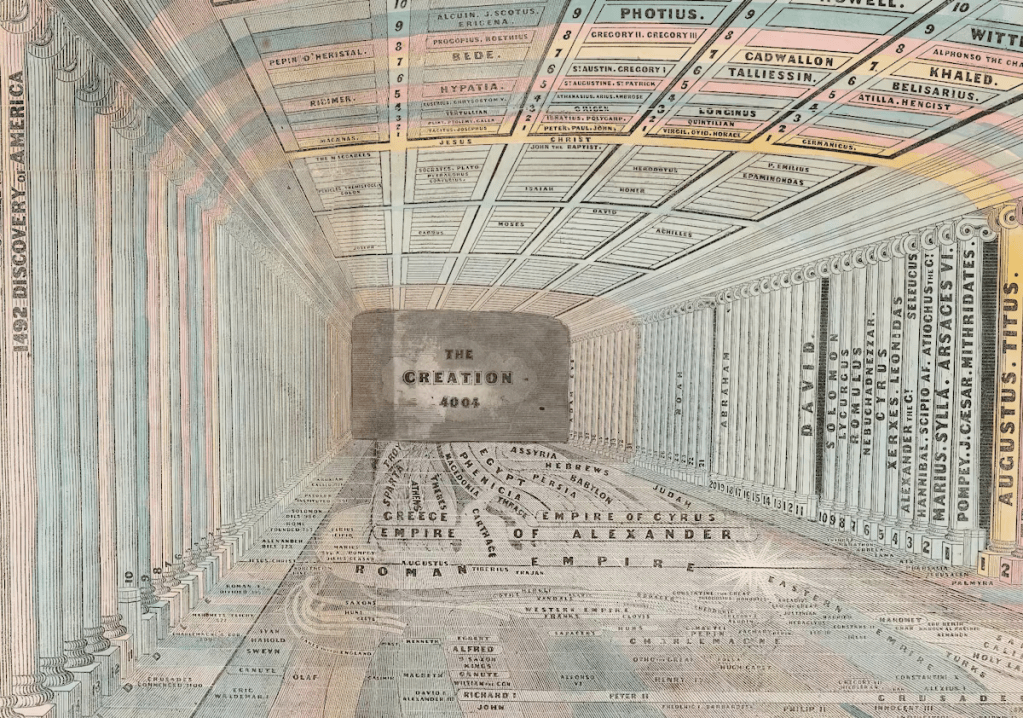
A printed image of a long receding hallway in a grecian temple, with timelines and chronologies forming the wall, floors, and ceilings. Emma Willard, “The Temple of Time” (1846), via Cartography Associates (CC BY-NC-SA 3.0) https://www.davidrumsey.com/luna/servlet/detail/RUMSEY~8~1~315043~90083688:The-Temple-of-Time#
Emma Willard, “The Temple of Time” (1846), via Cartography Associates (CC BY-NC-SA 3.0)

Note: SB 21 (repackaged as SS 1 for SB 21) passed the Delaware House late on Tuesday, March 25, 2025 and was signed into law the same night by Governor Meyer. The bibliography below is updated to include reports through the following day – March 26, 2025 – but nothing beyond that point.

Since it was dropped on an unsuspecting public two weeks ago, Senate Bill 21 has occasioned a great deal of both propaganda and conversation – and even some reporting and evidence-based analysis. This short bibliography (or, less pretentiously, link-roundup) is intended to help Delawareans and other folks get up to speed on the issue, understand the forces in play, and get a sense of the stakes. 

I will update it, as my time allows, and events merit. I have tried to (mostly) link publicly accessible sources, but there may be some paywalled exceptions. 

Some caveats: the bibliography below is not comprehensive, nor is it intended to be. It’s what, in my judgment, is the most useful for understanding what the hell is going on.

Also! It is not a guide to the bloggy conversations among corporate law specialists, a play-by-play for Dover courtiers’ inside baseball, or the group chat among oligarchics’ agents – though it intersects with all of those discourses. (Go to LinkedIn, Facebook, and Signal, respectively, if you want those.)  

Get Up To Speed

Xerxes Wilson, “Controversial Corporate Law Changes Passed by House, Signed by Delaware Governor,” The News Journal, March 26, 2025, https://www.delawareonline.com/story/news/2025/03/25/delaware-corporate-law-changes-chancery-court-signed-into-law-by-governor-matt-meyer/82655315007/;

Karl Baker and Jacob Owens, “Meyer Signs Controversial Senate Bill 21 into Law after Bitter House Debate,” Spotlight Delaware, March 26, 2025, http://spotlightdelaware.org/2025/03/26/meyer-signs-senate-bill-21/.

Lora Kolodny, “Meta’s Potential Exit from Delaware Had Governor Worried Enough to Call Special Weekend Meetings,” CNBC, March 19, 2025, https://www.cnbc.com/2025/03/19/meta-billions-of-dollars-at-stake-in-overhaul-delaware-corporate-law.html.

Lora Kolodny, “Tesla’s Law Firm Drafts Delaware Bill That Could Salvage Musk Pay Package,” CNBC, February 18, 2025, https://www.cnbc.com/2025/02/18/firm-representing-musk-tesla-drafts-bill-for-delaware-corporate-law.html.

Jordan Howell, “DelDems Roll over for Musk,” Delaware Call, February 17, 2025, https://delawarecall.com/2025/02/17/deldems-roll-over-for-musk/.

Primary Source(s)

Senate Substitute 1 for Senate Bill 21: “AN ACT TO AMEND TITLE 8 OF THE DELAWARE CODE RELATING TO THE GENERAL CORPORATION LAW,” filed March 12, 2025, passed March 25, 2025, https://legis.delaware.gov/BillDetail/141930

  • Primary sponsor: Sen. Townsend
  • Cosponsors: Sen. Sokola, Lockman, Hocker, Pettyjohn; Reps. Griffith, Minor-Brown, Harris, Osienski, Dukes, Spiegelman

House Amendment 1 to Senate Substitute 1 for Senate Bill 21, filed March 18, 2025, [proposed amendment, not picked up] https://legis.delaware.gov/BillDetail?LegislationId=141964

  • Sponsor: Rep. S. Phillips
  • Summary: “This Amendment mirrors the proposed changes in SS 1 for Senate Bill 21, but provides that the corporation must “opt-in” to adopt them. It adds a new section one, which describes the method by which the corporation may opt in to the changes from the default, existing law.”

Senate Bill 21: “AN ACT TO AMEND TITLE 8 OF THE DELAWARE CODE RELATING TO THE GENERAL CORPORATION LAW,” filed February 17, 2025, https://legis.delaware.gov/BillDetail/141857 [original bill]

  • Primary sponsor: Sen. Townsend
  • Cosponsors: Sen. Sokola, Lockman, Hocker, Pettyjohn; Reps. Griffith, Minor-Brown, Harris, Osienski, Dukes, Spiegelman

Senate Concurrent Resolution 17, https://legis.delaware.gov/BillDetail/141858

  • Primary sponsor: Sen. Townsend
  • Cosponsors: Sen. Sokola, Lockman, Hocker, Pettyjohn; Reps. Griffith, Minor-Brown, Harris, Osienski, Dukes, Spiegelman

Delaware General Corporation Law, Delaware Code, Title 8, https://delcode.delaware.gov/title8/c001/

Office of the Governor, “Discussion Re: Corporate Franchise,” February 2025, https://www.scribd.com/document/840790103/CNBC-copy-2025-03-12-de-Governor-FOIA-Response-38#download&from_embed.

  • Internal emails between personnel in Gov. Matt Meyer’s office and various Musk & Zuckerberg associated lawyers, coordinating drafts, details, & messaging around the push for SB 21;

Dig Deeper

The items below represent a wide spectrum of debate on SB21 and the political economy of Delaware’s corporate law; inclusion is not an endorsement that a given piece is reliable, truthful, or accurate – simply influential. This list is organized chronologically, working backwards from most recent.

Xerxes Wilson, “Controversial Corporate Law Changes Passed by House, Signed by Delaware Governor,” The News Journal, March 26, 2025, https://www.delawareonline.com/story/news/2025/03/25/delaware-corporate-law-changes-chancery-court-signed-into-law-by-governor-matt-meyer/82655315007/;

Karl Baker and Jacob Owens, “Meyer Signs Controversial Senate Bill 21 into Law after Bitter House Debate,” Spotlight Delaware, March 26, 2025, http://spotlightdelaware.org/2025/03/26/meyer-signs-senate-bill-21/.

Karl Baker, “Lobbying on Corporate Law Change SB21 Enters Final Stretch,” Spotlight Delaware, March 21, 2025, http://spotlightdelaware.org/2025/03/21/sb21-final-stretch/.

Katie Tabeling, “Top Delaware Firm Takes Quiet Role in Corporate Amendment Debate,” Delaware Business Times, March 20, 2025, https://delawarebusinesstimes.com/news/firm-quiet-role-in-corporate-amendment/.

Lora Kolodny, “Meta’s Potential Exit from Delaware Had Governor Worried Enough to Call Special Weekend Meetings,” CNBC, March 19, 2025, https://www.cnbc.com/2025/03/19/meta-billions-of-dollars-at-stake-in-overhaul-delaware-corporate-law.html.

Yvonne Deadwyler, “Preserving the Corporate Franchise Is in the Interest of All,” Delaware Business Times, March 18, 2025, https://delawarebusinesstimes.com/news/viewpoint-sb-21-deadwyler/

Katie Tabeling, “Meet the Business Organizations Endorsing SB 21,” Delaware Business Times, March 17, 2025, https://delawarebusinesstimes.com/news/business-endorsing-sb-21/

Joel Friedlander, “Are Hamermesh, Chandler and Strine Making Delaware Corporate Law Great Again?,” The News Journal, March 17, 2025, https://www.delawareonline.com/story/opinion/2025/03/17/are-hamermesh-chandler-and-strine-making-delaware-corporate-law-great-again-opinion/82490918007/.

Joseph R. Mason, “SB 21 Could Cost Delaware Millions,” Delaware Business Times, March 17, 2025, https://delawarebusinesstimes.com/news/viewpoint-sb21-could-cost-millions/

Matthew G. Jacobs, General Counsel, CalPERS to Senator Bryan Townsend, et al, Re: “Delaware Senate Bill No. 21,” March 14, 2025, https://s3.documentcloud.org/documents/25590146/letter-from-calpers-to-delaware-leadership.pdf.

Katie Tabeling, “How a New Bill Raises Uncertainty in Wilmington’s Legal Economy,” Delaware Business Times, March 14, 2025, https://delawarebusinesstimes.com/news/sb-21-legal-economy/.

Karl Stomberg, “Capital Fight or Flight: Delaware’s History of Gangster Capitalism and the Need for a Democratic Economy,” Delaware Call, March 13, 2025, https://delawarecall.com/2025/03/13/capital-fight-or-flight/.

Greg Vallaro, “Delaware Senate Bill 21 Is a Disaster. It’s Time to Call Strike Three,” News Journal, March 12, 2025, https://www.delawareonline.com/story/opinion/2025/03/12/delaware-senate-bill-21-is-a-disaster-opinion/82277898007/.

Jeffrey P. Mahoney, “SB 21 Threatens Long-Term Shareholder Rights,” Delaware Business Times, March 10, 2025, https://delawarebusinesstimes.com/news/viewpoint-sb-21-shareholder-rights/.

Alan Jagolinzer et al., “The False Crisis Pushing Delaware to Surrender Shareholder Rights,” ProMarket, March 7, 2025, https://www.promarket.org/2025/03/07/the-false-crisis-pushing-delaware-to-surrender-shareholder-rights/.

William Chandler and Lawrence Hamermesh, “Delaware’s Corporate Law, Proposed Amendments Play Fair,” Delaware Business Times, March 6, 2025, https://delawarebusinesstimes.com/news/viewpoint-sb21-chandler-hamermesh/.

June Carbone, Nancy Levit, and Naomi Cahn, “Elon Musk and the Rise of the Dictator CEO,” Washington Monthly, March 6, 2025, http://washingtonmonthly.com/2025/03/06/elon-musk-and-the-rise-of-the-dictator-ceo/.

Cris Barrish, “Is ‘DExit’ a Real Threat to Delaware’s $2B-a-Year Incorporation Kingdom, and Will the Proposal Protect or Destroy ‘the Franchise’?,” WHYY, March 5, 2025, https://whyy.org/articles/dexit-delaware-franchise-incorporation-industry-billionaires-bill/

“Legal Experts Weigh in on Townsend’s Remarks in Delaware Call Interview,” Delaware Call, March 4, 2025, https://delawarecall.com/2025/03/04/legal-experts-weigh-in-on-townsends-remarks-in-delaware-call-interview/

Daniel Taylor, “Delaware’s Manufactured Corporate Crisis,” Delaware Business Times (blog), March 4, 2025, https://delawarebusinesstimes.com/news/viewpoint-taylor-sb-21/.

Chris Foulds, “Billionaire Corporate Law Smash-and-Grab Could Destroy Delaware’s Economy,” News Journal, March 3, 2025, https://www.delawareonline.com/story/opinion/2025/03/03/billionaire-corporate-law-smash-and-grab-could-destroy-delawares-economy-opinion/80549853007/.

Andrew Verstein, “The Corporate Census,” SSRN Scholarly Paper (Rochester, NY: Social Science Research Network, February 25, 2025), https://papers.ssrn.com/abstract=5154952

  • NB this item is a working paper – meaning, it is an unpublished draft, that has not undergone peer review. All arguments should be understood as preliminary, and incomplete.

Ann Lipton, “Rip American Shareholder Capitalism,” Financial Times, February 24, 2025, sec. FT Alphaville, https://www.ft.com/content/85eccee4-3890-4c25-bd89-eb522b95efb9

Lawrence Cunningham, “Delaware Aptly Balances Certainty and Scrutiny in Corporate Law,” Bloomberg Law, February 24, 2025, https://news.bloomberglaw.com/us-law-week/delaware-aptly-balances-certainty-and-scrutiny-in-corporate-law.

Dael Norwood, “The Data Does Not Support the Narrative,” Goose Commerce (blog), February 23, 2025, https://daelnorwood.com/2025/02/23/the-data-does-not-support-the-narrative/.

Jordan Howell, “Delaware Call Interviews Sen. Bryan Townsend About SB21,” Delaware Call, February 21, 2025, https://delawarecall.com/2025/02/21/delaware-call-interviews-sen-bryan-townsend-about-sb21/.

Ryan Cooper, “Why Are Delaware Democrats Trying to Give Elon Musk $55 Billion?,” The American Prospect, February 21, 2025, https://prospect.org/api/content/63bddae0-efd3-11ef-9411-12163087a831/.

Jacob Owens, “Chief Justice Seitz Warns Lawmakers against Reducing Courts’ Independence – Spotlight Delaware,” Spotlight Delaware, February 21, 2025, https://spotlightdelaware.org/2025/02/21/chief-justice-warns-lawmakers-against-reducing-courts-independence

Peter Walker, “Is Delaware Losing Startup Incorporations to Other States? … (No),” LinkedIn (blog), February 21, 2025, https://www.linkedin.com/feed/update/urn:li:activity:7298753740558254080/.

Delaware Working Families Party (DE-WFP), Stop Elon Musk’s Corporate Law Bill, https://actionnetwork.org/letters/stop-elon-musks-corporate-law-bill

Public Citizen, Americans for Financial Reform, American Association for Justice, Consumer Federation of America,  STOP DELAWARE SENATE BILL 21https://www.stopsb21.com

Andrew Blumberg, Ben Potts, and Tom James, “Delaware Corporate Law Myth-Busting: The ‘Expanding Definition’ of Controlling Stockholder,” The Harvard Law School Forum on Corporate Governance (blog), February 21, 2025, https://corpgov.law.harvard.edu/2025/02/21/delaware-corporate-law-myth-busting-the-expanding-definition-of-controlling-stockholder/.

Jennifer Kay and Jef Feeley, “Musk’s War on Delaware Spurs State Bill to Hang On to Businesses,” Bloomberg.Com, February 19, 2025, https://www.bloomberg.com/news/articles/2025-02-19/musk-s-war-on-delaware-spurs-state-bill-to-hang-on-to-businesses.

Collin Woodard, “Musk’s New Plan To Get His $56 Billion: Change The Law,” Jalopnik (blog), February 19, 2025, https://www.jalopnik.com/1794019/musks-new-plan-to-get-his-56-billion-change-the-law/.

Dael Norwood, “The Golden Goose Is An Arsonist,” Delaware Business Times, February 19, 2025, https://delawarebusinesstimes.com/news/viewpoints/viewpoint-the-golden-goose-is-an-arsonist/.

Karl Baker and Jacob Owens, “Landmark Delaware Corporate Law Changes Aim to Stem Exits,” Spotlight Delaware, February 19, 2025, http://spotlightdelaware.org/2025/02/19/delaware-corporate-law-change-sb-21/.

Ann Lipton, “Delaware Decides Delaware Law Has No Value,” Business Law Prof Blog (blog), February 18, 2025, https://www.businesslawprofessors.com/2025/02/delaware-decides-delaware-law-has-no-value/.

Jacob Owens, “Meyer Considers Corporate Court Reform, Drawing Concern,” Spotlight Delaware, February 11, 2025, http://spotlightdelaware.org/2025/02/11/meyer-chancery-court-reform/.

Ann Lipton, “Delaware Decides Delaware Law Has No Value,” Business Law Prof Blog (blog), February 18, 2025, https://www.businesslawprofessors.com/2025/02/delaware-decides-delaware-law-has-no-value/.

Delaware

The Data Does Not Support the Narrative

Or, Why Are Delaware’s Leaders Huffing Musk’s Swamp Gas? 

Louis Dalrymple, “Uncle Sam’s Dismal Swamp,” Puck, November 15, 1893, https://www.loc.gov/pictures/resource/ppmsca.29155. Print shows Uncle Sam sitting on a log in a swamp labeled "Spoils System" from which snakes labeled "Quayism", "Bardsleyism", and "Tannerism", and noxious fumes rise in the form of shades labeled "Raumism - Pension Swindler, Crokerism, McLaughlinism, Tweedism, Prendergast - Political Assassin, [and] Guiteau - Political Assassin". Also shown among the tree roots is Charles A. Dana.

The state government of Delaware is in the process of amending its corporate law to benefit Elon Musk, personally, and people like Elon Musk – oligarchic managers who use their control of corporate boards to loot regular investors – more generally. The mechanism is Senate Bill 21, legislation that was drafted by Elon Musk’s attorneys, a fact confirmed by the bill’s filer, Senator Bryan Townsend.

The rationale for this rash action is fear: fear that if Delaware does not extinguish judicial independence to better fit Musk’s perverse desires, Delaware will lose critical revenues, as Musk leads corporations to “DExit,” or registering in other states, because of Chancery Court decisions that since 2022 have supposedly upset the balance of power between shareholders and corporate managers. 

The data does not support the panicked narrative that SB 21’s supporters have been promoting, however. That narrative seems to be a product of Musk, and his paid agents, spreading misinformation like a miasma across the state.

Delaware’s Corporate Franchise is a Volume Business

Delaware benefits in several ways from having outside corporations registered here. The most valuable benefit is revenues from the “corporate franchise tax.” This is a fee that corporations headquartered outside the state provide Delaware for the “privilege of being incorporated in Delaware.” (Fiscal Notebook, 2024 ed, p. 108). In recent years, the corporate franchise tax, alone, has provided ~20% of total state revenues, or about 1.2 billion dollars. (Personal income tax, paid by human people, provides 33% of the total state revenue). (Fiscal Notebook, 2024 Ed, p. 32).

The critical thing to know about the corporate franchise tax is that it is not an income tax: it’s a set of tiered fees, assessed based on a corporation’s total number of authorized shares – but with a max payment cap of $250,000. 

In other words, Delaware is in a volume business, not a value business. Delaware has – or rather, should have – an interest in appealing to the largest number of corporate registrants, not the wealthiest billionaires. That’s a critical point, because the interests of most corporations – and most investors – do not align much at all with the desires of oligarchs like Elon Musk.  If it wants revenue, Delaware shouldn’t be catering to the tiny cohort of vampires. 

Back to Delaware politicians’ panic: you would think if the corporate franchise tax revenue is indeed in peril – if the “DExit” movement is real, and not just a propaganda hallucination  – then there would be some data to support that claim.

Alas for Musk et al., and their well-paid agents, three data points suggest the opposite is true.

1) Startups Continue to Choose Delaware

Peter Walker, “head of insight” at Silicon Valley data infrastructure firm Carta, recently shared a chart from his company’s private dataset demonstrating that 90% of startup C-Corps are domiciled in Delaware – a percentage that has “barely shifted in the last 5 years.” Including in 2024.

Source: Peter Walker, “Is Delaware Losing Startup Incorporations to Other States? … (No),” LinkedIn (blog), February 21, 2025, https://www.linkedin.com/feed/update/urn:li:activity:7298753740558254080/.

2) The Number of Corporations Filing Franchise Taxes Keeps Going Up

The most recent public figures show that 309,911 firms filed franchise tax payments in FY 2024 – an increase that continues the unbroken upward trend of the last decade, before the recent Chancery Court decisions, and then through and beyond them.  

A bar chart showing a steady increase in the number of franchise tax filers from 2015 to 2024. Annual Comprehensive Financial Report, FY 2024 (Delaware Department of Finance, Division of Accounting, 2024), p.206.

Source: Annual Comprehensive Financial Report, FY 2024 (Delaware Department of Finance, Division of Accounting, 2024), p.206

Now, total corporate franchise tax receipts have dipped, somewhat, from 2023 to 2024. But they have done so following the same patterns as the Corporate Income Tax. 

Source: “Tax Receipts: Corporate Franchise Tax,” and “Tax Receipts: Corporate Income Tax,” in Fiscal Notebook FY 2024 ed., pp. 109, 115

That suggests to me that the cause lies in macroeconomic conditions – unemployment, inflation – rather than anything to do with Delaware’s legal regime. (Corporations paying income tax here do business here; they can’t exit as easily as paper registrants, and have less incentive to do so). 

3) DEFAC Forecasts Steady Corporate Franchise Tax Receipts

Since 1977, Delaware’s state government has relied on the Delaware Economic & Financial Advisory Council, or DEFAC, for economic forecasts. DEFAC meets quarterly to assess data, and issue guidance – guidance that the General Assembly usually regards as binding on legislation.

At the December meeting, DEFAC forecasts steady franchise revenues for FY 2025, 2026, and 2027. That is consistent with economic indicators – at least, prior to Musk’s installation as co-president – and suggests this expert body saw no threat in the data of the sort SB 21’s draftees were already hallucinating.

Musk’s Pungent Miasma is Not Reality

In short, private and public data sources agree: there is no observable decline in incorporations in Delaware, and no evidence that “DExit” is occurring in response to Chancery Court rulings. Further, the advisors specifically tasked with forecasting future franchise tax revenues – that is, a body of people mostly not employed by Elon Musk – do not see evidence for dramatic change. 

An alternate explanation does fit the data better, though. Elon Musk’s lawyers drafted SB 21 to benefit their oligarchic clients, not Delaware. Musk’s paid agents are breathing the bad vibe fumes they want to see in the world into existence. The odor of panic they’ve wafted into lawmaker’s nostrils is thus a miasma, in the classic sense: unhealhy and unpleasant air, produced as the unpleasant exhalation of rot and corruption, that causes feverish illness.

Delaware’s leaders should not radically revise our laws, and gut a valuable franchise, on the basis of huffing Musk’s swamp gas. 

———-

Header Image source: Louis Dalrymple, “Uncle Sam’s Dismal Swamp,” Puck, November 15, 1893, Library of Congress, https://www.loc.gov/pictures/resource/ppmsca.29155.

Data Sources

Note: while by statute, the heads of Delaware’s state agencies are supposed to provide public reports on things like the total number of corporations registered here, and revenues derived from them, in practice Delaware state government is … uninterested in transparency. Opacity is part of the value Delaware provides, apparently. 

The upshot is that basic data, and foundational statistics, are often hard to get, and difficult to parse using normal methods even when located. Still, while our state government officials are intentionally(?) incompetent at communicating to the public, they have not shirked their duties completely; there are sources worth your time & examination.

Delaware Department of Finance, Division of Accounting, Annual Comprehensive Financial Report, FY 2024https://accountingfiles.delaware.gov/docs/2024acfr.pdf.

While this report is not linked on the DE Finance Department’s page, you can find it at that URL. An annual report, it offers a wealth of up-to-date statistics on the fiscal situation of the government of Delaware, including revenues and expenditures, as well as detailed supplemental information on specific taxes, fees, pension contributions, bond obligations, and subsidiary agencies. 

Delaware Fiscal Notebook: 2024 Edition (Delaware Department of Finance, 2024), https://financefiles.delaware.gov/Fiscal_Notebook/2024/2024-Fiscal-Notebook-Combined.pdf. (aka Fiscal Notebook, 2024 ed)

The fiscal notebook is a rehashing of much of what is in the ACFR, but summarized and more richly contextualized look at the state budget, with historical data and legislative histories. If you want to know when the corporate income tax changed, and under what legislation, the Fiscal Notebook is your guide. It has some charmingly 1990s graphic design, as well. Prior reports are available here.

Delaware Economic & Financial Advisory Council (DEFAC), https://finance.delaware.gov/financial-reports/defac-revenue-forecast/ 

DEFAC posts cryptic briefing books and terse meeting minutes, grouped by date, on this page. If you dig far enough, you can find their predictions; and if you want a bit of fun, take a look at how far off they were in their predictions (usually they underestimate revenues by quite a bit, and overestimate the cost of expenditures; there appears to be a spirally structural austerity built into their models, assuming any models actually exist beyond intuition).  

Delaware Division of Corporations, https://corp.delaware.gov/

In theory, under the law, this page should contain the division’s up-to-date annual reports, detailing numbers of business entities registered in Delaware, and other pertinent information. In practice, this website is a wasteland.