Our Glorious National Heritage

A Terrible Thing To Say In a Good Speech

The Newseum is a monument to some of our most precious freedoms, and I’m grateful for this opportunity to discuss how those freedoms apply to the challenges of the 21st century.

~Hillary Clinton, “Remarks on Internet Freedom,” The Newseum (Washington, DC), January 21, 2010

I don’t care what else the “Newseum” does, it will never make up for the that travesty of a name. It’s a monument to journalism in the same way the Las Vegas strip is a monument to old world refinement, with perhaps the added distinction of being a tombstone for a dead industry that perhaps deserved better.

That said, Secretary Clinton’s speech on China and Google, is well worth reading or watching. More on that later.


Image cite: .michael.newman. “Bronze Fonz profile,” Flickr, CC License

Uncategorized

Finally, Wolfram Alpha Has A Purpose!

Or, A Use for the Otherwise Useless

It can convert from words to pages! This is (seriously) something I have immense trouble with, especially with conference papers. I spent a good hour procrastinating about this just last week, so now I need a new hobby. Gee thanks, Wolfram Alpha.

…

Long hiatus, I know. Writing, dissertating, being lazy — all things that take time.

I have big plans for the new year, er, semester, though. So watch this space! Or at least keep it in your rss reader.

In the meantime: C. Vann Winchell makes for some fun light reading– a one man TMZ for history. I wish he would post more.

PS – (h/t) to Merlin Mann.


Image Cite: xurble,“Wolfram and Hart,” Flickr, CC License.

Uncategorized

Commercial Sheep

Or, If I had to read this, so do you


Bad writing in economics has a long history:

Mr. Pennant, in his British Zoology, chap. I. div. I. sect. iii. under the article Sheep, makes the following observations:

It does not appear, (says that agreeable writer) that the breed of this animal (sheep) was cultivated for the sake of the wool among the Britons; the inhabitants of the inland parts of this island either went intirely naked, or were only cloathed with skins.
…
On the coins or money of the Britons are seen impressed the figures of the horse, the bull and the hog, the marks of the tributes exacted from them by the conquerors (Camden.) The Rev. Mr. Pogge was so kind as to inform me, that he has seen on the coins of Cunobelin that of a sheep. Since that is the case, it is probable that our ancestors were possessed of the animal, but made no farther use of it than to strip off the skin and wrap themselves in it, and with the wool inmost, obtain a comfortable protection against the cold of the winter season.

~Tench Coxe, Remarks on Lord Sheffield’s Observations on the Commerce of the American States; by an American (London, 1784), p.19-20

Update: also this little tidbit, a few pages later:

In England, it is well known they spend half their money in drink. (p.26)


* Made a tiny bit more tolerable by the fact that the original uses a long s, which I always hear it as a lisp while reading.

Image cite: Wiccked, “Sheepish,” Flickr, CC License

History and Historians

meta meta meta

Or, Towards a Universal Theory of Geekery
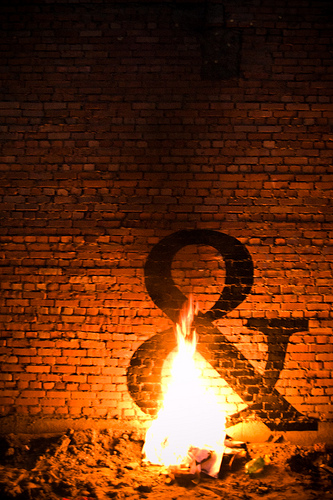
Fing_Meta

A meme cut an interesting path through my blog reader the other day.

First, I saw that the eminent historians and philosophers over at The Edge of the American West were worrying over a particularly stupid Amazon copy protection patent (shorter Amazon: changing words in e-books will help us stop pirates!). The gist of the comments was that the Amazon idea would destroy the experience for the reader, and make it impossible to do certain types of research and teaching; very much a response as consumers of texts — and not, for the most part, as producers. (Money quote: “It’s my understanding that historians always insert at least one subtle but distinctive misstatement of fact in each chapter…”)

That EotAW post tipped it’s hat to the blog of SF author John Scalzi — who was mainly annoyed, as an author, that Amazon would try and copy-protect his books by changing the words. (” Hard as it may be for Amazon to believe, I actually use the words I intend to use when I write.”)

He in turn linked to Slashdot, meme generator of old, which filed Amazon’s idiocy under more long-term complaints with copy protections, and the rush to claim prior art, etc. (Money quote from comments: “Yo dawg, I put a clock in your clock so I can sue you while you check the time.”)

(Also: Here’s Amazon’s actual patent)

So, two things. First, in all three places, one of the first comments was about how map makers supposedly insert small mistakes into their work to make it easy to track down copies. Memes within memes, folks.

Second: an interesting chain of readership / comment, eh? über-geek site to sf writer to history blog? Makes you think historians and hackers might have something in common, or something.

Nah…


1.) Shorter everyone else: Bzzzt! False, Amazon, false.

Image cite: fox.out22, “Burning fuckin’ Meta,” Flickr, CC License

Uncategorized

Annals of Ahistorical Thinking

Or, This is Why We Can’t Have Smart Things

White Horse

Here’s Andrew Sullivan, on Beast Books, the current bête noire of professionally nostalgic media entrepreneurs.

I miss the days when books were written because an author simply had something to say and took her time to say it well.

May I propose a thought experiment to see whether Sullivan’s nostalgia is just lazy thinking or a justified use of the world-weary declension card? When was that golden age? When books were written by disinterested Serious People, for pure thought, seriously? Precisely, I mean. I’d like dates.

Perhaps Sullivan is referring to that one golden afternoon of September 25, 1965, or perhaps those madeleine-encrusted years between 1913 and 1927. But probably he dates the true end of the golden age to October 10, 2006, no?

Somehow, I doubt any precision will be forthcoming. One hears lots of talk about the dangers of scientific ignorance, but I think ignorance of historical thinking is a problem that goes to the highest levels, too. If even our paid thinkers don’t understand how to think historically, what then? Goodness me, wreck and ruin, I suppose.

Pointless nostalgia will out, though. Écrasez l’infâme!

Update: links fixed.


Image cite: cybertoad, “White Horse,” Flickr, CC License