
Or, Why did an 18th-century planter become a load-bearing symbol for the New Deal?
#BizManBook Research Note #2
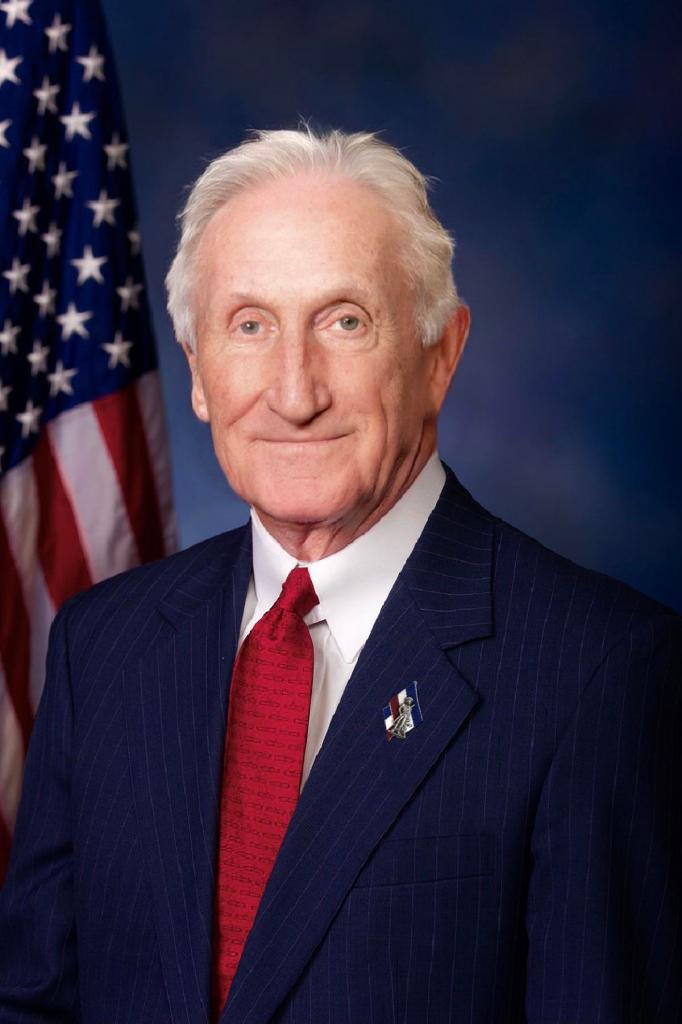
In 1932, the Hon. Sol Bloom (D-NY) staked a bold claim on the public reputation of George Washington. Director of the U.S. George Washington Bicentennial Commission, the experienced Congressman declared Washington a “business man,” par excellence. In a prominent essay, Bloom argued that the father of the nation was not just a brave soldier or a steady statesman. Rather, he was a “remarkable man of affairs” whose qualities as a “practical modern spirit” lay behind his success as a public man. A modern businessman’s mastery of system and detail proved the critical factor in Washington’s success on the battlefield and in the halls of power, Bloom claimed; a genius for business was what made Washington “the most successful American of his century.”[1]

As you might imagine, contorting the nation’s favorite hero into a businessman during the nadir of the Great Depression took some effort. Bloom didn’t do it alone; his article was developed in conversation with other historians and scholars, and together they built a case step by step. Bloom and his collaborators went over Washington’s early life to make the case that the provincial Virginian’s experiences with credit and debt instilled a worldly financial acumen – and then ransacked his rough and rarely balanced ledgers to demonstrate Washington’s capacity for analytical bookkeeping. Drawing on correspondence and diaries, they argued Washington carefully optimized his workforce, using different methods to “drive” his laborers, both enslaved and free, toward greater efficiencies. Finally, they integrated Washington’s activities as a real estate promoter and experimental planter into his presidential political agenda. The General’s prophetic vision for a westward-expanding nation – and thus, American greatness – was rooted in his experience as a “business organizer” seeking to enhance land sales through infrastructural development.[2]
The work didn’t end with the evidence. Bloom’s essay was tip of an iceberg of public addresses, research monographs, curricular plans, and radio programs that aimed to redefine Washington for a new era. The publications and presentation created or directed by the Bicentennial Commission were legion – Bloom claimed “4,760,345 separate and distinct programs” over the course of nine months celebration – and a significant portion explicitly described Washington’s business acumen.[3] And they inspired many, many more.[4]
In Washington, Bloom and his collaborators found – or rather, made – a prototypical businessman, one who happened to exhibit exactly the kind of genius (and public spirit) that the early 20th-century entrepreneurial elite claimed for itself. The question is: why? Why would busy public officials spend federal resources – and invest immense amounts of personal time – to promote a new understanding of a remarkable eighteenth-century gentleman planter as a conventional contemporary business man? And why do it during the greatest crisis capitalism had yet produced?
I’m not sure yet. Bloom’s own biography provides some clues: born in Illinois to a family of immigrant Polish Jews, he made his fortune as an impresario and then publisher in the music industry, before going big-time in NYC as a music store magnate and real estate developer; the entrepreneurial ethos was part of his own story. But while that’s perhaps necessary background, it’s not sufficient – particularly given the reaction that Bloom received for this work.
In his own time, Bloom’s work appears to have been both publicly persuasive and important to the cause of New Deal liberalism. Franklin Delano Roosevelt, one of many who wrote to congratulate Bloom on the Bicentennial Commission’s successes, lauded him for going beyond a “mere demonstration of memorial fervor” and creating “an immortal legacy in the form of historical facts” that “future historians and scholars may rely upon.” Bloom’s work had “reached deep into the hearts of the people,” FDR noted, “and revived in them fundamental reasons for pride of country and faith in its system of government.”[5]
Given this, it seems important to figure out how and why accounting George Washington as a businessman came to do such critical work in restoring faith in the American system in a moment when it faced an unprecedented crisis.
I’ll let you know how it goes…
[1] Sol Bloom, “Washington the Business Man,” in Honor to George Washington and Reading about George Washington, ed. Albert Bushnell Hart (Washington, D.C.: United States George Washington Bicentennial Commission, 1932), 131
[2] Sol Bloom, “Washington the Business Man,” 131–45. Though reproduced widely throughout Bicentennial Commission productions, the arguments in Bloom’s essay appear to have been published first – and at much greater length – in Halsted Lockwood Ritter, Washington as a Business Man (New York: Sears Publishing Company, Inc., 1931). Historian Albert Bushnell Hart, Bloom’s collaborator on the U.S. George Washington Bicentennial Commission, also summarized these points in an address to the Business History Society in which he nominated Washington for an honorary, posthumous membership. Albert Bushnell Hart, “George Washington as a Business Man,” Bulletin of the Business Historical Society 5, no. 1 (1931): 14–17. These publications are close enough together – and close enough to the large effort of the Bicentennial Commission – that it is as-yet unclear who originated this argument, and under what circumstances.
[3] Sol Bloom, “Preface,” Activities of the Commission and Complete-Final Report of the United States George Washington Bicentennial Commission(Washington, D.C.: United States George Washington Bicentennial Commission, 1932), xii.
[4] Subsequent biographers of Washington have repeated and ratified these claims. E.g., James Thomas Flexner, George Washington, 4 vols. (Boston: Little, Brown, 1965), John Berlau, George Washington, Entrepreneur: How Our Founding Father’s Private Business Pursuits Changed America and the World (New York: All Points Books, 2020).
[5] Franklin Delano Roosevelt to Sol Bloom, December 29, 1933, in Sol Bloom Papers, Manuscripts and Archives Division, The New York Public Library, Box 61, Folder R.



 Dael A. Norwood