Archival Follies

Today’s Historical Infographic: Money

Or, Look! I Found a Neat Thing

CASH in various denominations and formats RULES EVERYTHING AROUND ME

Sometimes you fall down a nineteenth-century government statistical bulletin hole. It happens; I can’t explain it (and I’ll never get those hours from FRASER or HSUS back).

But what I can do is share this neat, colored-in chart of “United States Money in Circulation, 1860-1895” (see above).

It’s from the October 1895 edition of the Monthly Summary of Commerce and Finance of the United States, my second favorite issue of that glorious publication (first place, obviously, belongs to November 1895, for its unexpected and unprecedented compilation of tea customs receipts from 1790 onward). Here’s the specific page (gated by Hathi Trust).

Also, in case you missed it, the U.S. Government once produced a terrifyingly detailed map about syphllis.

Archival Follies, Golden Ghetto, Our Glorious National Heritage

Humblebragging Around the Horn

Or, Don’t Even Get Him Started on CrossFit

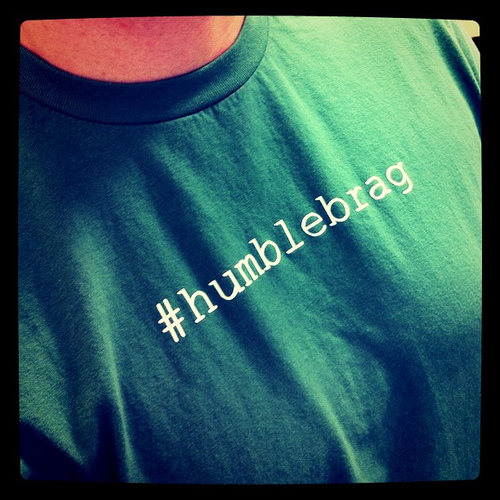
Humblebrag

Richard Cleveland was a sailor, an entrepreneurial merchant, and a well-traveled man – but not a shy one. In his retirement, he published at least three editions of his memoirs, and by the end of the nineteenth century, and he and his children had produced some three different versions of his life’s story, all also in multiple transatlantic editions. Scholars still look to him today for details on Americans’ dealings in the Pacific, and beyond.

He’s a good source, if one we should perhaps examine mainly for its narrative framing and plot elements as much as for specific details. Among other feats, he was, as he explained in the preface to his lengthy autobiography of his time spent on the seas, as good a flinty, thrifty New Englander as Max Weber (or Freeman Hunt) could ever have wished for:
Continue reading “Humblebragging Around the Horn”

Archival Follies, Our Glorious National Heritage, Power At Play

Josh Giddings Lays the Smack Down

Or, Shut it, Calhoun

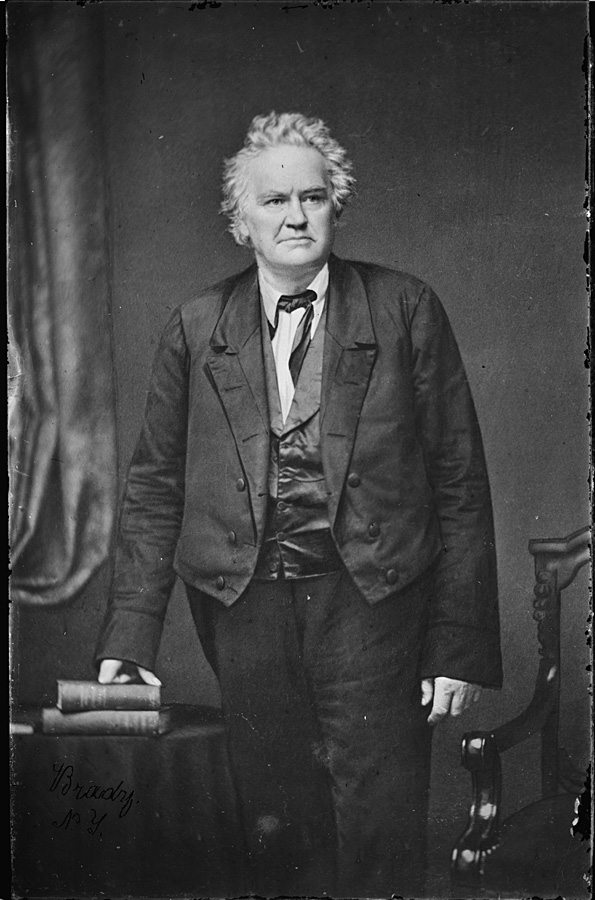
Joshua R. Giddings

Sometimes, studying nineteenth-century America can get damned depressing. It’s a slaughter-bench, and for most of the century, the guys that win (and they’re all guys) seem to be the worst possible: slaveholders, imperialists, filibusters.

There’s an antidote to this, though, and that’s reading Congressional debates.

Well, some of them.

Continue reading “Josh Giddings Lays the Smack Down”

Archival Follies, Our Glorious National Heritage

Keep Your Good Pirate Eye on the Market

Are you Kidding me?


While doing other research today, I ran across the following curiosity:

“The first merchandise direct from the Orient exposed for sale in America was brought to this country by pirates. Arabian gold, pearls from the Indian Ocean and Oriental fabrics abounded in the chief cities of the colonies. The treasure of Captain Kidd that was seized in Boston in 1699, contained a characteristic assortment of piratical plunder: ‘an iron chest of gold, pearls, etc., 40 bails [sic] of East India goods, 13 hogsheads, chests and case, one negro, and Venture Resail, a Ceylon Indian.’ Resail was one of the first Asiatics to visit America.”
~Charles Oscar Paullin, Diplomatic negotiations of American naval officers, 1778-1883, (Baltimore: The Johns Hopkins press, 1912),157.

There is a lot going on here, and I don’t have any time at the moment to do any more research, but I did want to put a pin in it here for later. In no particular order, some thoughts, then:

  • That smuggling should have been the first (direct) source of Asian goods in America is more than appropriate
  • The presence of human beings in the “pirate” cargo puts the lie to fantasies of pirate democracy, eh? Or perhaps just reflects the Boston authorities inability to conceive of such a thing…
  • Paullin’s archaic language aside, the name “Venture Resail” seems too self-consciously literary to be true. Sure, while it wasn’t unheard of of slaveholders to give slaves ironic names (Caesar, etc), this name seems a bit on the nose even for that — really, 2 puns in one  name? — no less for its relation to Kidd’s case, a big deal at the time and a subject of much mythologizing since.

In any case, very curious, and something I’m interested in looking into further, once I have a spare moment again.


Image source: Pyle, Howard “With the Buccaneers ” in Howard Pyle’s Book of Pirates: Fiction, Fact & Fancy Concerning the Buccaneers & Marooners of the Spanish Main (New York, United States, 1921), Wikipedia.org, http://en.wikipedia.org/wiki/File:Pyle_pirates_burying2.jpg

And now for something completely different..., Archival Follies, Our Glorious National Heritage

Geese Beware!

Or, Trafficking in Goose Proverbs

Silly Goose by Kris *V*, on Flickr
Creative Commons Attribution-Noncommercial-No Derivative Works 2.0 Generic License  by  Kris *V* 

Amidst some recent research,I ran across a pro-Jeffersonian Embargo (probargo?) newspaper piece which opened its partisan catechism with a curious saying:

I guess the fox is a Federalist?
~

“For the Columbian Phenix,” Columbian Phenix (Providence, RI), 12 November 1808

The editorial itself is a dialogue, where one side, expressed in italics, offers simple opinions by someone who opposes the Embargo (I admire the administration of Washington or I like not your republican principles etc), and the longer answers, in plain text, offer detailed rebuttals. Since the Phenix [sic] appears to be a Jeffersonian newspaper, the piece seems to be a preaching-to-the-choir editorial, aimed at mobilizing the base — a GOTV operation. (The catechism form of political hackery is a bit different from how we present things today, but you could think of it as a sort of talking points memo).

But as someone with a vested interest in things brantaïc, I was more curious about the epigram than the Republican politicking.

From a few searches in the usual places (Google Books, HathiTrust, etc), it seems the phrase was common enough – and old enough – to be rooted in the primers and spellers, the basic textbooks of the 16th through 19th centuries. Specifically, it proverb appeared in an often-reprinted list of the “best English proverbs” in books like the New England Primer:


~Westminster Assembly. The New-England primer, improved, for the more easy attaining the true reading of English. To which is added, the Assembly of divines catechism (Hartford : Printed by Hudson & Goodwin, M,DCC,LXXXVIII. [1788].)

Perhaps unsurprisingly –- and despite its later Republican bona fides –- these geese-centric proverbs don’t appear in Noah Webster’s (successful) attempt at a nationalist reconstruction of language, A Grammatical Institute of the English Language (1783). The more influential of his works during his own lifetime and for well after (who reads a dictionary after all?), the GIEL included a speller, a grammar, and a reader, all aimed “[t]o diffuse an uniformity and purity of language in America, to destroy the provincial prejudices that originate in the trifling differences of dialect and produce reciprocal ridicule, to promote the interest of literature and the harmony of the United States…” — or so, at least, he explained in the Preface to the American Spelling Book.

In that light, one can hardly expect the best English proverbs to have remained, once all the thoroughly monarchist and colourful extra vowels have been removed, right? And as go the English proverbs, so go the geese. Flown away, but not forgotten.